This reminds me of the time in Diary of a Wimpy kid when all the kids act as if their friend Chirag is not there.
Thursday, May 29, 2014
Look who came back!
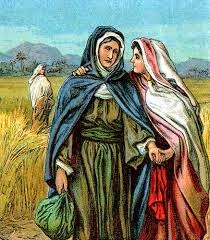
When Rut returns you would think that everyone would acknowledge her presence and would be happy to see her. Instead everyone ignores her and seems to act as of they could care less. Naomi does not welcome her and acts very rude about the situation. After telling Rut to leave you would at least think she would welcome her back.
This reminds me of the time in Diary of a Wimpy kid when all the kids act as if their friend Chirag is not there.

This reminds me of the time in Diary of a Wimpy kid when all the kids act as if their friend Chirag is not there.
Thoughts on stuff
So it seems as though we've run out of time. Ruth will have to hold out for a little while until we can revisit her again. But what I've learned the from the two (two?) classes we've dedicated to Megillat Rut is worth blogging about (because I want to blog, obvs, not because I have a missing blog to make up. Psshhhh.)
Naomi has had a pretty awful life, that's for sure. I can't imagine what it would be like to lose your entire family over a span of a few years. Understanding her situation, we can feel sympathetic towards her. However, it is pretty difficult to feel this way when she is just so rude and bitter. After Rut proclaims her loyalty to Naomi and essentially binds herself to her for the rest of her life, Naomi responds in the exact opposite way that we'd expect: she doesn't. She goes silent, and stays that way for a while. It's crazy-- if someone were to make such a huge sacrifice for her, wouldn't she at least say thank you?
While Naomi was angry and depressed over the loss of her family, maybe there was something more here that made her give Rut the silent treatment. In the pessukim before, Naomi tries to send Rut and Orpah away. It wasn't until after multiple requests for them to go that Orpah listened. Maybe Naomi just really didn't want Rut to come with her. Maybe it was painful for Naomi to be around her. After all, she is her dead son's wife. Or maybe she didn't want to deal with the embarrassment of bringing a foreign woman back to Israel. Whatever it was, Rut treats Naomi pretty terribly. However Rut doesn't seem to care. She continues to stick with Naomi, refusing to leave her side. This is an incredible insight into just how wonderful Rut was as a person.
Naomi has had a pretty awful life, that's for sure. I can't imagine what it would be like to lose your entire family over a span of a few years. Understanding her situation, we can feel sympathetic towards her. However, it is pretty difficult to feel this way when she is just so rude and bitter. After Rut proclaims her loyalty to Naomi and essentially binds herself to her for the rest of her life, Naomi responds in the exact opposite way that we'd expect: she doesn't. She goes silent, and stays that way for a while. It's crazy-- if someone were to make such a huge sacrifice for her, wouldn't she at least say thank you?
While Naomi was angry and depressed over the loss of her family, maybe there was something more here that made her give Rut the silent treatment. In the pessukim before, Naomi tries to send Rut and Orpah away. It wasn't until after multiple requests for them to go that Orpah listened. Maybe Naomi just really didn't want Rut to come with her. Maybe it was painful for Naomi to be around her. After all, she is her dead son's wife. Or maybe she didn't want to deal with the embarrassment of bringing a foreign woman back to Israel. Whatever it was, Rut treats Naomi pretty terribly. However Rut doesn't seem to care. She continues to stick with Naomi, refusing to leave her side. This is an incredible insight into just how wonderful Rut was as a person.
Wednesday, May 28, 2014
Ruth Redeemed
Ah, the story of Ruth... I know that many of you had already heard of this story prior to our Megillot class; well, I hadn't. It just wasn't one of those things that we learned in school ever, and I never bothered to look at it on my own. Therefore, when we started chavruta on Ruth a couple of weeks ago, I was entirely shocked at what I was reading. As many of you who were in the classroom with me at the time can remember, I was pretty outraged while reading the story. The first half of the Megillah seemed like a big blur about some unfortunate family moving from place to place. Next, I was also pretty amused when, in perek 3, I read what seemed to be Boaz advising Ruth against the "walk of shame". In perek 4 it seemed like Boaz was making a deal with a bunch of old people over who was going to keep Ruth. Needless to say, I was not impressed with Ruth in the least. Naomi was a "madam", Ruth was a stale wanton, and Boaz was some gross old guy who I guess was nice to tell his workers not to rape Ruth.
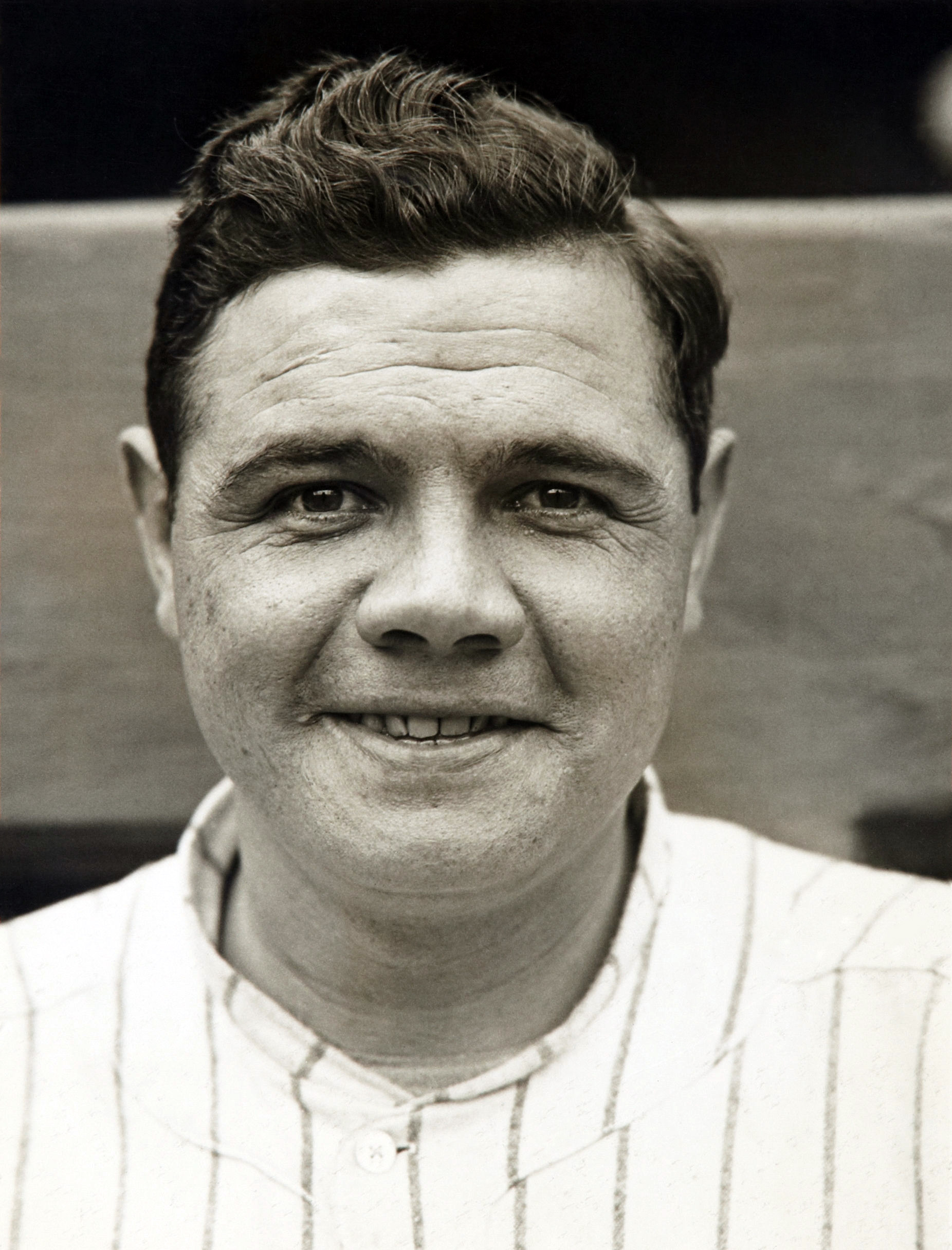
| Because who needs a picture of real Ruth when we can have a picture of Babe Ruth? Am I right? |
First off, who woulda thunk the setting would have been so important? I mean, sure, the fact that the Sefer starts off with "וַיְהִי, בִּימֵי שְׁפֹט הַשֹּׁפְטִים" should have been a hint, but for some reason I ignored it on my first go-around. In class, when we looked into sources from this time, the story was already starting to make more sense. The situation at this time was horrible: people were disgusting to one another, there was no social order, and, though people always had the word of God on their mouths, they weren't exactly 'religious' people. During this time period, there was no king and each man (or woman) did what was good in his (or her) own eyes. People were committing rape and idolatry all over the place. It was not a pretty scene. Enter: the story of Ruth. For the sake of time and interest, I am not going to go over the whole story. Rather, I'm just going to talk about the three main characters and what I think about their progressions throughout the sefer.
Ruth: Ruth gets to go first because she's the best. She is one of the most- if not the most- selfless person I have ever read or heard about. This Moavite woman (yes, Ruth) marries this guy (who cares about his name) who is originally from Chevron. When he, his dad, and his brother all die and Ruth's mother in law, Naomi wants to go back to Chevron, and doesn't invite her to go with. Actually, Naomi explicitly tells Ruth not to go. But Ruth, looking out for her mother-in-law, and the overall name of her husband's family, insists on going back with Naomi. Though Naomi ignores her, she never ceases to be right there by her side, supporting her through all their financial woes. She gives up her home, her youth, her life, really, all to make sure that Elimelech's family's name wasn't forgotten. She never stops to think "What about me?"-she's always thinking of the bigger picture. I can't stress this enough. Also, just a little bit more into the 'not-Jewish' thing: Ruth wasn't just a non-Jew, she was a Moavite. Jewish people actively rejected the Moavites from their society. Somehow, through all of that, she decided that she wanted to become one of them, and she wanted to help them. I can think of no woman other than Ruth who is more deserving to be the mother the malchut. Ruth doesn't go through much of a transformation, I think that's safe to say, in this sefer. I do not mean to imply that she is a static character, I only wish to convey that Ruth has been awesome since the first time we hear her speak. From the very beginning she is the "Avraham" of the story who leaves her homeland without a second thought. She gets more righteous and more selfless in her actions as the Sefer goes on, but something tells me she had it in her from the beginning. Ruth is "the woman". Can you even imagine making the kind of sacrifices Ruth made? I know I can't..
Boaz: He's good guy by the end of the sefer, but at the beginning of Ruth he seemed only slightly different from the regular people at the time. When we are first introduced to Boaz, we are told that he is related to Elimelech and we know that he is a prominent, land owning man of the town. Yet, when Ruth and Naomi come in town- and he knows he is in town- he does not extend a hand to their aid. Why not, Boaz? Huh? Too cool for fam? Later, when he is introduced to Ruth, he doesn't inform her of their relation. Sure, he tells his worker-men not to molest her, which is sweet, and he also lets her pick food there, which is also nice, he never actively does anything to help Ruth and Naomi out. Holding him to our ethical standards, he really fails. Holding him to the standards at the time, he'd rank above the average man, but not very much higher. Later, when Ruth visits him in the middle of the night (surprise!), she reminds him of his duties as a redeemer. Something about Ruth's message (Ruth is awesome. See above) suddenly awakens this moral part in him, and he becomes a changed man. He realizes that he is the redeemer with certain obligations. He actively sends things back with Ruth for Naomi. In the next perek he comes up with this brilliant plan to see whether the other redeemer (who is first in line to redeem) is a good guy (spoiler alert: he's not!). At the end of the sefer, I feel good about Boaz. Does Ruth deserve better? Of course. But, at least by the end of it he understands and appreciates her mission (plus he can support her financially which was very important). Thoughts on Boaz? Yay or nay?
Naomi: Naomi goes from being a terrible wench to an okay human being. Let's face it, folks: Naomi is an opportunist. She follows the bread. There's a famine- she leaves. Famine is over- she goes back. Her daughter-in-law is following her and potentially useless baggage- she doesn't speak to her. Her daughter-in-law can bring in the dough- she's all of a sudden "my daughter". Naomi is not consistent and shows no real growth that one can prove as genuine. I don't buy that Naomi is a good person because at the end, once Ruth redeems the family for her, Naomi takes care of her grandchild. Sorry- not impressed. Naomi may not be the owner of a brothel that I once thought she was, but she's not much better now that I know the real her. Yes, this sounds harsh. It's true- she was not worse than any of the other people at her time. At least she didn't commit any crimes! While this is correct, let's not forget that Naomi is the melodramatic old lady who told her old gossip buddies to call her "Bitter" because God has ruined her life. Eyeroll. Oh, Naomi. What about that wonderful Ruth girl who you have been so lucky to have for company all this way? Are your thoughts on Naomi as harsh as mine?
The Stereotypical Jewish Mother
In honor of our last week of Megillot classes, I decided to do something a bit more lighthearted than usual. My topic for today: how the lessons we learn from the book of Rut enumerate those of the "stereotypical Jewish mother."
The first quality is "being a reminder of responsibility." Rut cleverly reminded Boaz of what his job was, and that it had not yet been completed. He had a duty to her, and by all means he needed to complete the task. Well, a Jewish mom works the same way. Imagine the scene: the trash in our stereotypical Jewish household has not been taken out, and guess whose turn it is to take care of it? the child of the family, conveniently hiding out in his/ her room. As a grand reminder of responsibility, it's a Jewish motherly trait to muster all available lung power and cry "TAKE OUT THE GARBAGE! NOW, OR YOU'RE NOT GETTING 2nd PORTIONS AT DINNER!" As you can see, there is still an obvious care and concern for the child involved, same as how Rut brought up this topic to Boaz in a way that wasn't full of blame. Jewish mothers will pull you by your ears to get something done, but in the end they have a heart of gold.
The next quality is "looking out for the benefit of others above oneself." Rut worked for a greater purpose- the continuation of her deceased husband's name. She had nothing to gain from this viewpoint. Jewish mothers are also often pretty selfless. If a Jewish mom can see that you really want the cookie she's holding, she will give it to you with a smile on her face. Jewish moms really want their kids to be happy and successful, regardless of how much nudging and assistance their kids require to get to that point.
Lastly, Jewish moms (typically) work hard to instill a set of strong moral and ethical values into their kids. Rut also adhered to her own set of ingrained morals and ethics. She did what was right because she felt that it was the correct thing to do. Jewish moms try to do the same, and teach their kids to do so as well. I have heard stories of little kids who go grocery shopping with their moms, and happen to nab some candy while no one is looking. The good Jewish mom involved in this story yelled at the poor three year old and made him march back to the manager of the store, return the candy he grabbed, and apologize. That mortifying episode probably stuck in his head forever, and taught him early on that stealing is wrong. Clearly, Jewish moms want this lesson to be taught loud and clear, especially since we're the nation that is supposed to uphold Torah values. The least we can do is act like it.
Monday, May 26, 2014
Persistence
Today began those last two, dreadful weeks of the school year. It is time for exams, all other schools are out, and we just want to be done already. We need to get through these last 2 weeks without falling asleep, getting too stressed, and still doing a good job on finals. We must persist.
Just like we must persist in these last two weeks of school, Ruth, in Megillat Ruth, persisted when she begged Naomi to let her return with her to Bet Lechem. Whereas Orpah gave up and went back to Moav, Ruth persisted and finally pushed Naomi to let her go to Bet Lechem and live with her. It took her a while, but she did it. We must do the same. We have to persist through these last two weeks of school. We need to study for our finals and kick tushie on them! WOO! If our teachers make us really hard finals, we must persist because we only have like 12 more days of school! Ruth has inspired me to push through and do well to finish the year of strong!!
Thursday, May 8, 2014
Who is Ruth?
The time has come: we are finally learning Ruth! We started off reading through the beginning of Ruth last class, and even at the very beginning, one thing became crystal clear; Ruth is not your average person. First of all, she was a Moabite, and she married a Jewish man. That's unusual, but not exceptional. (It is forbidden for Jews to marry Moabite men, but not Moabite women, by the way.) Anyway, this was a big deal for her. She left her people and went to live with this small Jewish family. Apparently, they were a powerful and well known Jewish family, but that didn't change anything for her, because it is said that Ruth was from Moabite royalty. Clearly, she saw something very special in these Jews to want to live with them, follow their strange traditions, and abandon her own. She is also on very good terms with her mother in law, Naomi. As weird as that sounds, she is very attached to her in a special way. After Ruth's husband dies and Ruth no longer has a connection to Naomi, she still wants to stay with her and look out for her. Ruth is also drawn to her former husband's family's traditions. She wants to live like Naomi, and become one of her people. She insists multiple times that she will leave Moav with Naomi. She keeps her word, and they both arrive back in the promised land, to Naomi's home town of Beit-Lechem. Ruth had to have an incredible amount of courage and perseverance to go through with this move. This was a totally new land, culture, people, religion, and perhaps language to her, and yet she seems in control and put together throughout this whole ordeal. She is also perfectly willing to work for and take care of Naomi, as well as acting like Naomi is her superior. She makes sure Naomi is taken care of and gets her whatever she needs, even though that is not Ruth's responsibility. She even asks for Naomi's permission to gather grain! From the looks of it, it seems like we are dealing with a very unique and special person here, and I am interested in how things will progress further. Until next time, everyone.
Tuesday, May 6, 2014
A deep perspective of Rav grossman's article
Rav Grossman literally analysis from the megillah intentionally crafted to have a surface and dep meaning.
In the Rav groomsman article, they were based on deeper ideas and themes of Megillat ehster, that Rav Grossman came up with, which were:
1. The attitude towards monarchy: surface is achsevarsosh is so powerful that everyone follows by him, he's in control. The depth is "dat"- the reality is that the king had no real power and needed to rely on his advisors for everything. G-d's in control as opposed to the human king.
2. Attitude towards women: surface is that women are lower class citizens who are possessions and are controlled by men. The depth is that women are the protagonists in the story and the catalysts for action.
3. Attitude towards honor: surface everyone's seeking honor because with honor comes power. But the depth is if you look deeper the honor brings that it's not real power comes from the external honor of rank your given.
4. Attitude towards fate: surface is this happens by chance and reaction. And the depth is that"coincidences" can be explained by with G-d "pulling the strings."
5. Attitude towards G-d: surface he's not their- there's nothing Bout G-d. most secular people no mention of G-d. We appreciate the miracles that G-d does for us. The depth is that everything is controlled by G-d we have to seek him.
Worldmask/ Rav Dessler's idea: Is that G-d's name is intentionally left out of the megillah to teach us that we have to seek him out even when he is "hiding." The "coincidences" are written in such a way that we dont actually see them as coincidences but rather as the hand of G-d. So too, in our own life, when we no longer have revealed miracles (Har sinai) We have to reveal the mask ad find G-d.
Subscribe to:
Posts (Atom)